
The Room That Felt Distant
There was nothing technically wrong with the room.
The furniture was well made. The finishes were current. The lighting was layered. The color palette was restrained and elegant. On paper, it was successful.
And yet it felt distant - Not cold, Not uncomfortable, Just emotionally unavailable!
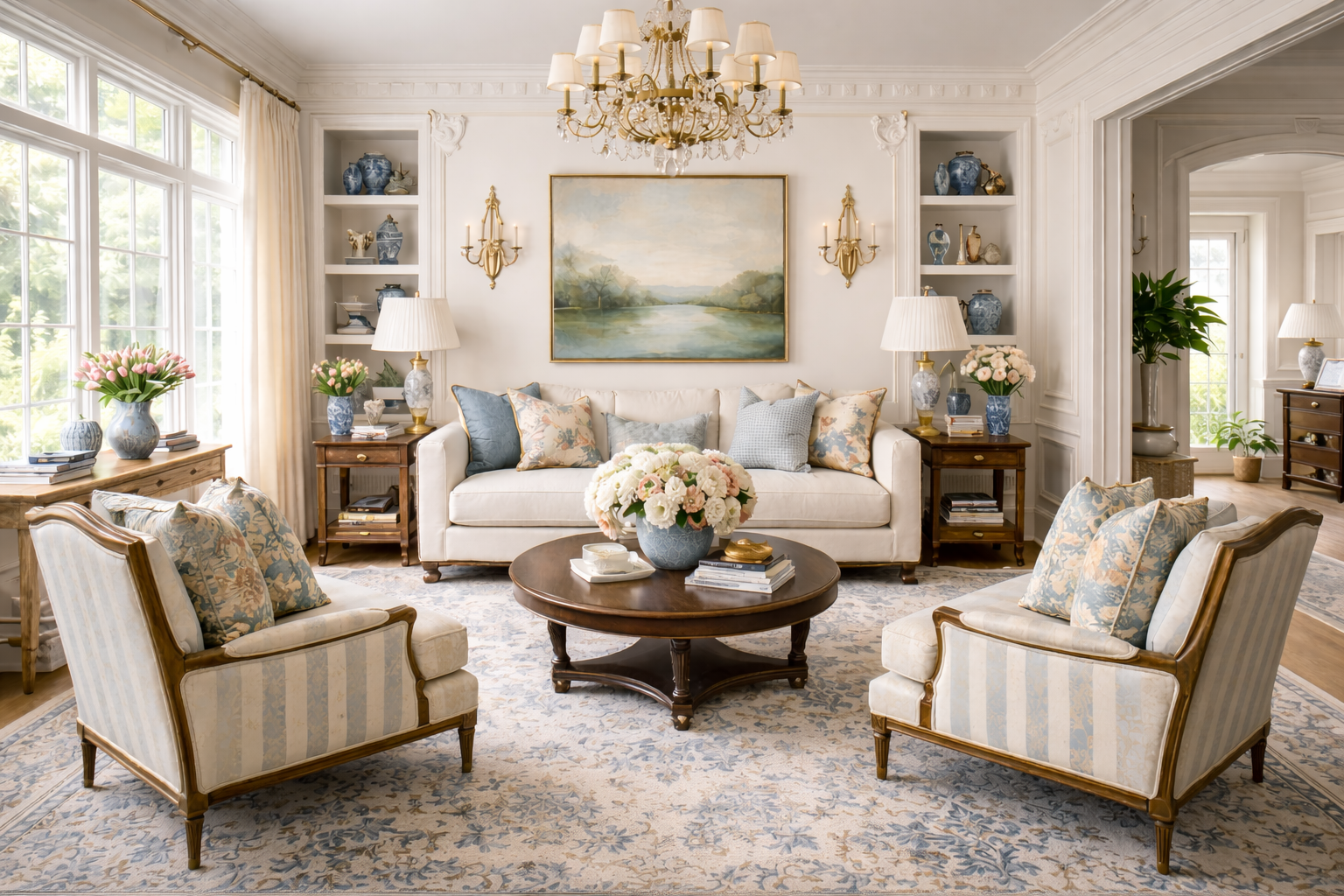
The Performance of a Room
Some rooms perform well visually but fail in use and behavior.
This one particular room had symmetry, perfect spacing between objects, styled shelves, adorned with a rug sized correctly for the seating group - Every decision aligned with design rules.
But no one lingered here. People had a peek and admired but no one sat.
Conversations drifted elsewhere. People passed through rather than settled in. The room functioned as a photograph, not as an environment.
The distinction - A room that is designed for visual approval behaves differently from a room designed for human occupation!
Where Does Distance Come From
Emotional distance in space is rarely about color or style. It usually stems from one of three structural misalignments:
1. Circulation Without Pause
When pathways dominate a room, people remain in motion.
✔️If furniture floats in the center without anchoring edges
✔️If seating faces walls instead of people…
✔️If the primary path cuts through the social zone…
The body reads it as transitional space. And transitional spaces do not invite vulnerability.
2. Seating Without Orientation
Furniture placement determines relationship.
Are chairs angled toward each other, or toward a screen? Is the sofa positioned for dialogue, or display? Does someone feel “exposed” when seated?
Orientation communicates hierarchy. It signals who belongs in the conversation and who does not. A room can look balanced but still feel socially imbalanced.
3. Scale Without Softness
Overscaled pieces create physical presence but emotional distance.
When everything is large, crisp, and pristine, there is no permission to relax into it. There is no tactile invitation. Humans need to touch and feel. In its absence arrangements feel cold.
Perfection can feel clinical as well. People and families do not unwind where there is lack of warmth or the environment is just too steeped into perfection.
The Absence of Imprint
The most distant rooms often lack evidence of life. There is always something too formal about them!
Where there are no layered textiles, lack of visible use, there are no stories to be told related to objects with narrative weight.
Nothing exists that suggests repetition, habit, memory. Design that misses imprint may achieve aesthetic clarity, but it removes psychological grounding of an associated story that either happened or one to be created..
Humans anchor to familiarity, use, warmth of touch and a sense of a little less pretty perfect. Without these, the room remains abstract.
What Can Change
The correction is not to be dramatic.
Furniture gets pulled closer together. The primary circulation path gets redirected go around. Chairs get angled inward instead of outward. The console table gets replaced with a low bookshelf that hold personal artifacts. A textured throw appears - not just styled, but also emanating warmth of use.
The visual composition barely shifts, but the behavioral response changes no doubt. And then people linger, sit and stay.
The Lesson
Distance in design is rarely about beauty. It is about alignment.
A room feels less distant when:
Movement results in gathering
Orientation leads to conversation
Aesthetic perfection converts into lived imperfection
Design is not measured by how a room looks when empty. It is measured by how people behave when they are inside it.
And sometimes, the most important question is not: “Does this look finished?” - But rather: “Does this feel available?”