
The Hidden Cost of “We’ll Decide Later”
“We’ll figure it out later” sounds like a reasonable approach when we are trying to stay flexible. In renovation, though, that phrase often becomes a quiet decision that costs you twice, first in money, and then in stress.
The truth is that later rarely sound practical because every renovation has a process and a sequence, and the sequence keeps moving whether you feel ready or not.
The hidden financial cost of delayed decisions
Renovation decisions are connected, which means postponing one choice usually triggers problems somewhere else. When you delay a key decision, you either force other choices to happen without the information they depend on, or you set yourself up for rework later.
That’s when “We’ll decide later” often becomes:
rushed approvals
last-minute compromises
change orders
re-ordering materials
paying trades to redo work that was already completed
A delayed decision doesn’t disappear. It moves downstream, where it’s harder to fix and more expensive to correct.

The ripple effect of how one delay disrupts the entire sequence
Renovations run on coordination. Layout changes affect rough-ins, rough-in changes affect finishes, and change of mind and reselecting finishes affect installations and final details. The intention is never to overspend but budget blowouts do happen when decisions are made in between on top of what was already decided. It is like a domino affect and before we know, we have created a crash!
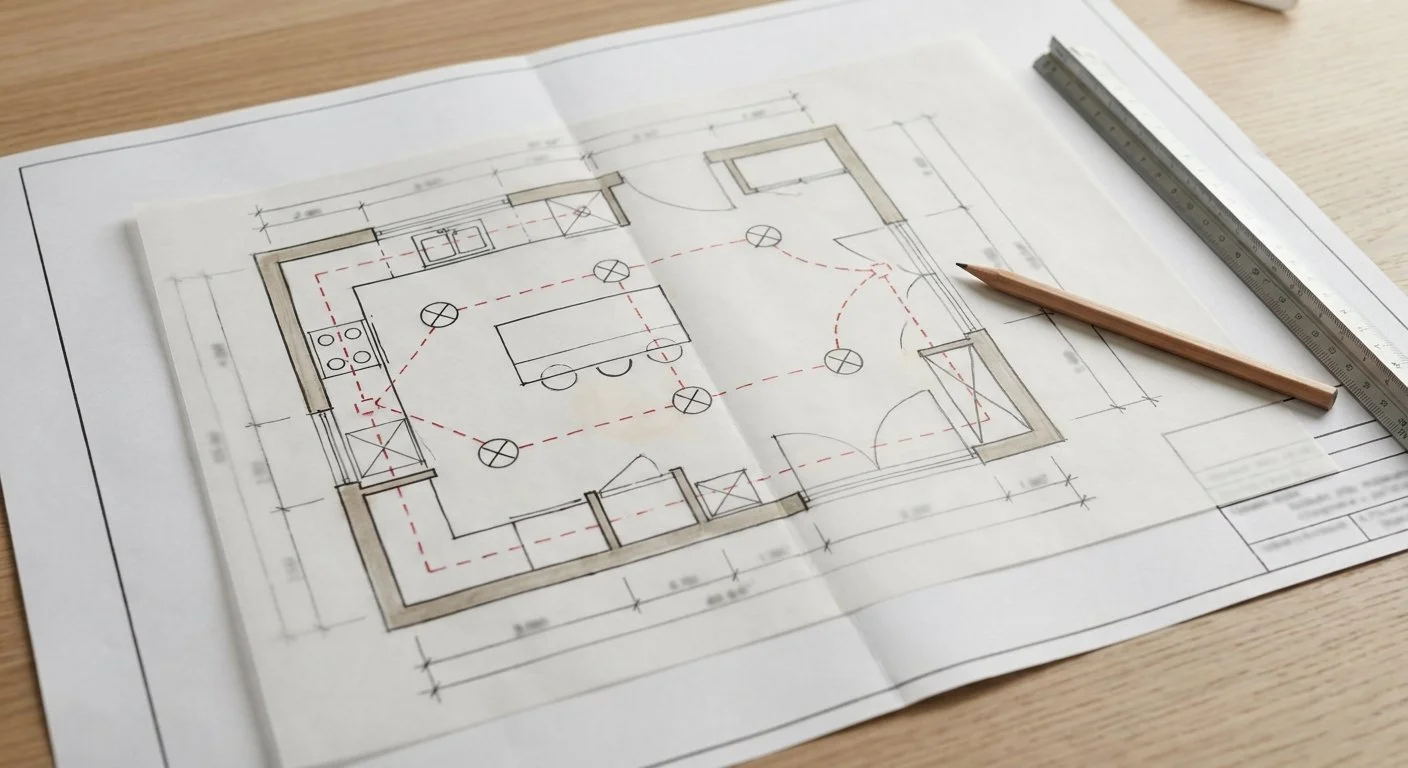
If the cabinet layout isn’t finalized early, the electrical plan can’t be confirmed.
When the electrical plan shifts, lighting locations change, and that can force changes to the ceiling plan.
Once the ceiling plan changes, framing and drywall schedules often change too, and then trades need to be rescheduled.
This adds fees to extra labor, rescheduling hassles, lost time, unavailability of people. One “small” delay can silently ripple across the entire build.
The emotional cost of decision fatigue and the pressure spiral
There is another cost that is rarely discussed and no-one budgets for. It is EMOTIONAL FATIGUE. When decisions pile up due to delays, no shows, reschedule issues, everything starts feeling urgent!
We stop evaluating options clearly. We start choosing the fastest option just to get the pressure off, and that’s often when regret sets in, shows up and later on creates to much pressure on everyone to perform, to finish the stage and move to the next one. Often the finish line gets blurred and then to reach the end we start choosing the fastest option just to get the pressure off, and that’s often when we see that things did not go as we anticipated.
Delayed decisions tend to create more meetings, more back-and-forth, more second-guessing, and more tension between the people involved. And the irony is that while we are trying to keep our options open it actually reduce all our chances of selecting good options.
We realize products and people are no longer available. At this point we are at high risk of timelines getting tightened and installers get booked. What used to feel flexible becomes a mad scramble which often end up in a blame game and dissatisfaction and expectations not met.
Deciding the right things at the right time
A well-planned renovation isn’t about deciding everything immediately. It’s about deciding the right things at the right time, so the project can move forward cleanly without constant reversals and “surprise” expenses. Clarity early doesn’t limit the design or the visuals. It actually protects our vision for the space, our budget without stretching it, and our peace and sanity. It also saves our relationships between partners or collaborators and protects the project from breaking apart in many ways!

Takeaway
If we want one simple principle to remember, then let’s remember that in renovation, “later” is rarely free.
When we make decisions in the right sequence starting with layout, followed by the technical systems, then finishes, and finally the details, we reduce both cost overruns and decision fatigue. The goal isn’t to rush, it’s to create enough clarity early on that the rest of the project can unfold with far less stress.